

Contact Details

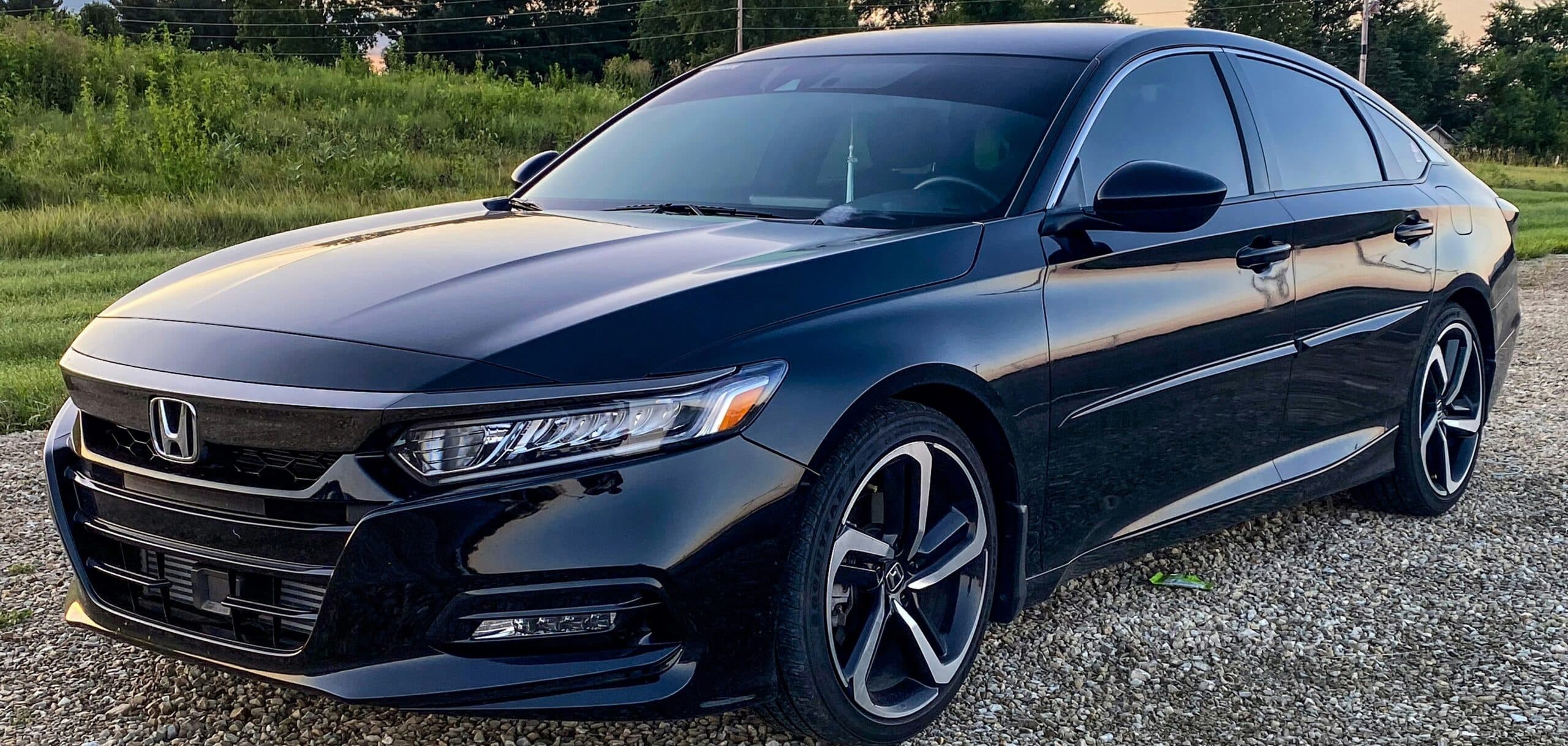
A year-by-year look at 40 years of Accord listings, and why the cheapest one on the page usually isn’t the best one to buy.
If you’ve spent any time scrolling Trade Me for a project Accord, you’ve probably noticed the same thing we have: the listings at the very bottom of the price range don’t actually look like bargains once you read the description properly. High kilometres, tired interiors, reserve not met three times running. They’re cheap because they’re worn out, not because they’re waiting for someone to unlock their potential.
I pulled pricing data across Accord listings from 1981 through to 2022, every generation, petrol and hybrid, to see what the market actually looks like once you line it all up. A few things stood out that changed how we’d tell someone to shop for one.
The assumption most buyers make is straightforward. Lower price means more room in the budget for parts and labour, so the cheapest running Accord you can find is the smartest starting point.
Our data says otherwise, and one comparison makes the point better than any explanation could. In 2008 alone, Accords sold anywhere from $2,590 to $11,000, a spread of more than four times, on the same model year. The $2,590 car had 237,548km on the clock. The $11,000 car had 79,300km. Same year, same badge, completely different cars. One of them has a lot more life left in the drivetrain and a lot fewer unknowns under the surface than the other, and the asking price only tells you that once you look past the year.
That pattern repeats right through the dataset. The model year on a listing tells you almost nothing about condition. Kilometres, and to some extent how the reserve was handled, tell you far more.
Widen the lens past a single year, and a second pattern shows up. Search “Honda Accord” on Trade Me, and you’re actually looking at two unrelated markets that happen to share a listings page.
The first is the low-kilometre survivor. A 1995 Accord LXi with just 7,600km sold for $11,000 in our data. A 1989 Accord with 33,147km fetched a $11,190 reserve. These are cars that spent most of their life garaged, not commuted in — and they’re priced accordingly, regardless of how old the plate says they are. This is not project material. Pulling one of these apart destroys the exact thing that makes it worth anything.
The second is the genuine high-kilometre daily driver, and this is where the real project candidates sit. A 2013 Accord with 222,161km sold for $7,000. A 2000 model with 203,200km went for $1,000 reserve met. These cars have done their commuting, they’re priced like it, and nobody is going to wince if you’re pulling panels off or swapping parts.
The trap is that both of these cars can show up on the same page, in the same rough price band, and look interchangeable if you’re only sorting by price or year. They’re not. One’s a time capsule. The other is genuinely what you’re shopping for.
Once you filter out the survivor outliers and the truly worn-out bottom end, there’s a band in the middle of the market that we’d point a project buyer toward first: cars from roughly 2007 to 2012, sitting somewhere between $7,000 and $15,000, with kilometres in the 80,000-150,000 range. A 2010 Accord at $10,150 with 134,973km, or a 2012 at $9,995 with 122,548km, are typical of what’s in that band.
These aren’t the cheapest cars on the page. But they’ve got enough life left in them that you’re building on something solid rather than starting a rebuild on a car that was already tired before you touched it, and they’re still affordable enough that there’s real budget left over for parts and work.
From about 2013 onward, hybrid and petrol Accords start showing up in the same listings, sometimes at very similar prices. A 2015 petrol Accord with 160,900km sold for $8,500. A 2015 hybrid with only 42,000km sold for $19,995, but a 2013 hybrid with 222,161km went for just $7,000, cheaper than plenty of petrol cars from the same era.
A cheap hybrid looks like the better deal on paper. High spec, lower running costs, similar price to a tired petrol equivalent. But a hybrid battery replacement is a real cost most buyers don’t price in until they’re already committed, and hybrid-specific parts are a smaller, less flexible market than the petrol equivalents we see coming through daily. If the plan is a project build rather than a straightforward daily driver, a cheap high-km hybrid is usually solving the wrong problem.
Full pricing data, 1981–2022
| Year | Price | Notes |
|---|---|---|
| 2022 | $36,990 | 58,200km, Hybrid |
| 2018 | $20,999 | 131,266km, EX Hybrid |
| 2017 | $21,990-$22,995 | 104,700km-93,800km, Hybrid |
| 2016 | $19,999 | 128,717km, Hybrid |
| 2015 | $8,500-$19,995 | Petrol 160,900km-Hybrid 42,000km |
| 2014 | $10,500-$18,990 | Hybrid, 169,898km-77,819km |
| 2013 | $7,000-$17,888 | Hybrid, 222,161km-39,958km |
| 2012 | $9,995-$14,990 | Petrol, 122,548km-108,000km |
| 2011 | $7,500-$10,950 | Petrol, 148,322km-101,000km |
| 2010 | $10,150-$16,995 | Petrol, 134,973km-85,000km |
| 2009 | $6,000+ | Petrol, 171,500km / 95,285km |
| 2008 | $2,590-$11,000 | Reserve met both, Petrol, 237,548km-79,300km |
| 2007 | $5,490-$21,990 | Petrol, 236,147km-110,802km |
| 2006 | $4,490-$14,990 | Petrol, 185,637km-132,265km |
| 2005 | $4,500-$18,000 | Petrol, 175,000km-202,000km |
| 2004 | $4,000-$8,000 | Petrol, 102,300km-82,900km |
| 2003 | $3,999-$5,895 | Petrol, 268,700km Wagon-144,000km |
| 2002 | $4,999 | Petrol, 214,000km |
| 2000 | $1,000-$3,000 | Reserve met, Petrol, 203,200km-200,000km |
| 1999 | $3,500 | Petrol, 185,000km |
| 1998 | $3,747 | Reserve met, Petrol, 146,518km |
| 1995 | $11,000 | Reserve met, Lxi Petrol, 7,600km |
| 1990 | $6,500 | Petrol, 185,000km |
| 1989 | $4,800-$11,190 | Reserve met, Petrol, 140,180km-33,147km |
| 1987 | $7,250 | Reserve met, Petrol, 111,169km |
| 1984 | $3,310-$5,000 | Reserve met, Petrol, 109,591km-248,000km |
| 1982 | $5,275 | Reserve met, Petrol, 57,684km |
| 1981 | $5,249 | Reserve met, Petrol, 88,073km |
Before you filter by price, filter by what the car actually is. A low-kilometre example from any era is worth keeping stock- the value is in its originality, not in what it could become. A genuine high-kilometre driver in that mid-price band is where the real project candidates live, and it’s usually not the cheapest car on the page.
And if parts availability is part of your planning-which it should be, for any project build-that’s exactly where we can help. Whether you’re chasing panels for a 2010 petrol Accord or trying to work out what a hybrid drivetrain component is actually going to cost you, get in touch, and we’ll tell you straight what’s realistic.
About the Author
Manpreet Kaur
Office AssistantManpreet works as an Office Assistant. She began her professional journey with National Car Parts, where she has developed a solid understanding of the automotive and customer service sectors. With a...
