
Contact Details

If you are not sure what the difference is between AWD and 4WD, you are not alone. You may know the full forms of AWD and 4WD, but you don’t understand how they work. Don’t worry, that’s fine. Today, we will learn the difference between AWD and 4WD, their pros and cons, and which is better for New Zealand’s roads.
All-Wheel Drive (AWD) is a system that automatically distributes power to all of the wheels of a vehicle. Now you might be thinking that all vehicles have four wheels and the drivetrain powers all four, isn’t that also Four Wheel Drive? Yes, but the difference is that AWD vehicles send torque to all four wheels, and that torque is split between the front and rear axles.
Unlike traditional systems, AWD is always active and doesn’t require driver input.
Key features of AWD
AWD is perfect for city driving, and highways offer better traction on wet or slippery roads, making it ideal for everyday driving in Auckland, especially when rainy roads are common. It gives better control and stability without requiring the driver to think about engaging or disengaging the system.
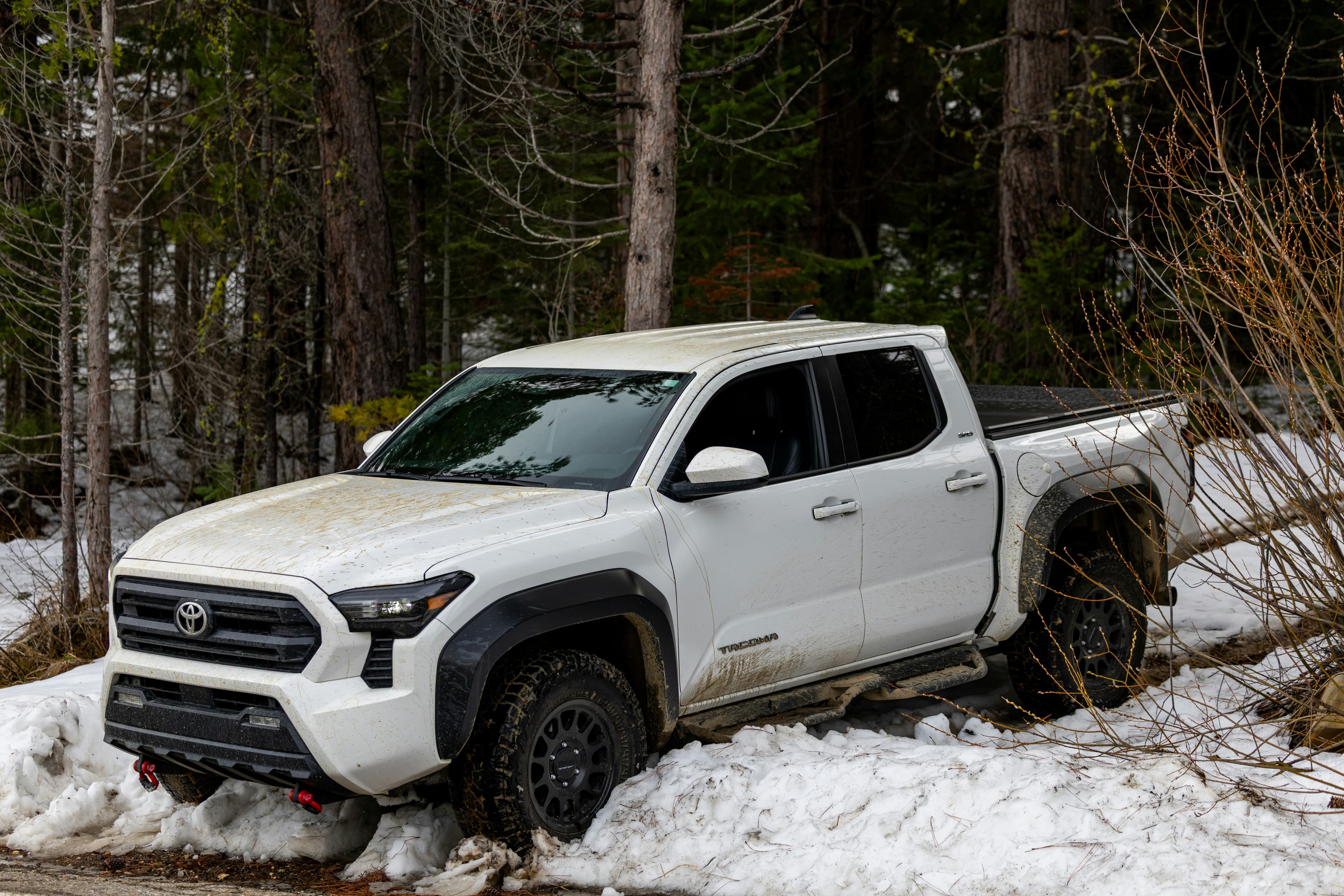
Four-Wheel Drive(4WD), also known as 4×4, is typically found in utes and off-road vehicles. Unlike AWD, 4WD systems are often manually activated and designed for rugged terrain. In a 4WD system, the two-axled drivetrain delivers torque to all four wheels simultaneously. This type of drivetrain is commonly found in trucks and sport utility vehicles (SUVs) that are built on truck platforms. 4WD is particularly useful in extreme road conditions and off-road adventures.
Key features of 4WD
| Feature | AWD (All-Wheel Drive) | 4WD (Four-Wheel Drive) |
|---|---|---|
| Power Delivery | Distributes power to all four wheels automatically, often with variable torque between front and rear. | Sends power to all four wheels, usually manually distributing engine torque to all four wheels via a transfer case and differentials. |
| Control | Automatic system; driver doesn’t need to engage it. | Driver-controlled system (manual or automatic modes); driver can engage/disengage and select high/low range. |
| Terrain Suitability | Ideal for on-road conditions, wet or slippery roads; limited off-road capability. | Designed for off-road, rough, or uneven terrain; ideal for mud, snow, and rocks. |
| Fuel Efficiency | Generally, it is more fuel-efficient due to automatic engagement and a lighter driveline. | Less fuel-efficient because 4WD adds weight and mechanical drag; low-range 4WD increases consumption. |
| Maintenance Complexity | Simpler maintenance; fewer drivetrain components under stress. | More complex; includes extra components like transfer case and low-range gears, leading to higher maintenance needs. |
Pros:
Better for daily driving
Improved traction in rain and snow
No driver input needed
Cons:
Less capable off-road
Slightly higher fuel consumption
Pros:
Excellent off-road performance
Better for heavy-duty use
More control in tough conditions
Cons:
Not ideal for everyday driving
Can be less fuel efficient
Requires driver engagement
It is important to consider which is better, AWD or 4WD. Mainly, it depends on your driving needs. AWD is perfect for city driving, occasional highway driving, and bad weather. On the other hand, 4WD is ideal for off-road, rural, and heavy-duty use. If you’re located in Auckland, AWD is more practical. It handles rain-soaked roads and occasional gravel paths easily. However, if you’re regularly heading to rural areas, or commercial work, 4WD may be the more better option.
Both AWD and 4WD provide power to all four wheels, but they are designed for very different purposes. AWD is best for everyday driving and safety, while 4WD is designed for hard, off-road conditions.
However, both systems come with higher maintenance costs, and when they fail, repairs can be expensive. But when required, opting for parts from auto wreckers, which always have a wide range of quality parts, can be the best way to get quality parts at an affordable price.
Do you have broken and damaged vehicle? We buy them and pay up to $15000 for it. Get a quote now.
Fill out the form below
About the Author
Manpreet Kaur
Office AssistantManpreet works as an Office Assistant. She began her professional journey with National Car Removal & Car Parts, where she has developed a solid understanding of the automotive and customer service sectors. With a background in digital marketing, Manpreet brings valuable skills in strategy, communication, and online engagement, helping the organisation effectively connect with its customers. She is passionate about ensuring customers receive clear, helpful information and a positive service experience. In addition to her operational role, Manpreet enjoys writing informative content that educates customers and supports the business’s online presence. Her enthusiasm for learning and contributing meaningfully to the organization continues to drive her professional growth.